There are 168 hours in a week. Work takes a big share, and it should. The question is how many of the rest you actually choose.
Own Your Time is a weekly read for working professionals, corporate leaders and first-generation entrepreneurs who want more say in where those hours go. Every Sunday you get one piece: an idea you can try that week, or a conversation with someone who has learned to run their days instead of being run by them.
You don't have to quit your job to read it. Most of the people we write about haven't.
Try it
Where does your week go?
Move the sliders to match a normal week. The brass part is what's left for you to choose. Nothing you enter is saved.
It probably isn't what the productivity videos told you. A short piece on why this isn't about quitting your job, or about squeezing more out of every hour.
Own Your Time is new, and we would rather say so than pretend otherwise. There are no subscriber numbers to show you yet. What we can show you is how we work. Every story is about a real person, recorded with their permission, and they read the piece before it goes out. Nothing is published without their go-ahead. We're a content platform by Time Freedom, a company that makes watches and wall clocks, and we'd rather you hear that from us. Judge us on the first few Sundays. If they aren't worth five minutes of your week, unsubscribing takes a moment.
Opens our newsletter page. Enter your email there and you're in.
To join, send a one-line email with the word Subscribe to:
connect@ownyourtime.in
Issue No. 01 goes out on Sunday 4 October. Know someone who owns their time well? Write to connect@ownyourtime.in.
Start here · Time and Attention
What does it mean to own your time?
It probably isn't what the productivity videos told you.
By Neel · 5 minute read
Say "own your time" to most people and they picture one of two things. Someone who quit their job and now works from a laptop by the sea. Or someone who wakes at five, plans their day in fifteen-minute blocks and gets an alarming amount done.
I don't think either of them has it figured out.
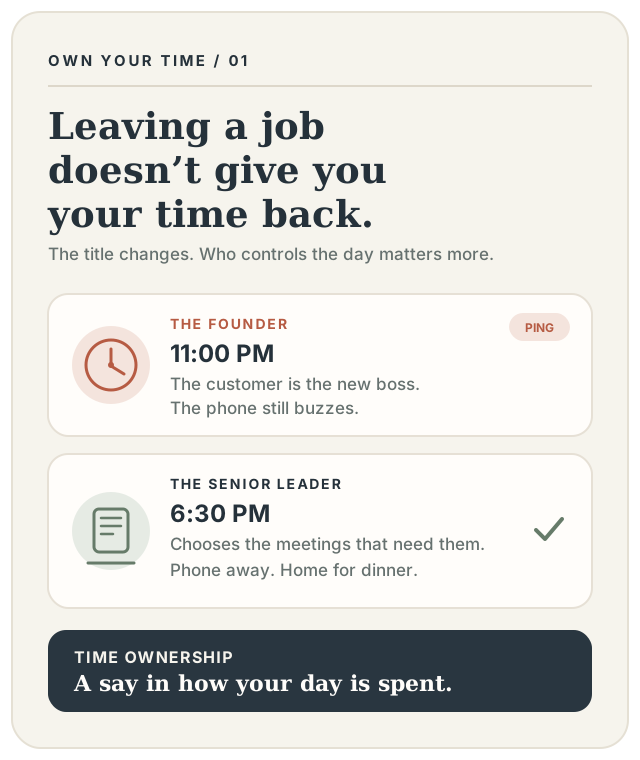
Leaving a job doesn't give your time back
A lot of founders work longer hours than they ever did in an office. The boss changes. The phone still buzzes at eleven at night, only now it's a customer.
Meanwhile, some people in very senior corporate roles have a surprising amount of control over their days. They choose which meetings need them. They decide when they're unreachable. They're home for dinner most nights, and the work still gets done.
Where you work matters less than who is making the decisions about your day.
The title changes. Who controls the day matters more.
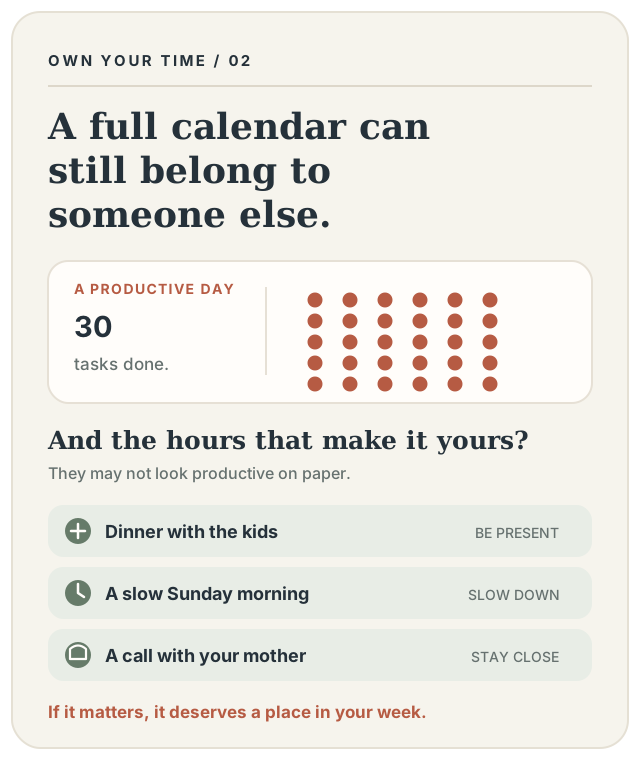
A full calendar can still belong to someone else
Getting more done is useful. But you can tick off thirty tasks and still end the day feeling like it happened to you.
Some of the most important hours in a week look unproductive on paper. Dinner with the kids. A slow Sunday morning. An hour on the phone with your mother. Owning your time has to include those, or it isn't worth much.
If it matters, it deserves a place in your week.
So what is it, then?
For me, it means making more of the decisions about where my hours go, and making them on purpose. In practice it comes down to four things:
Attention
What gets your focus, and what doesn't.
Work
The work you take on, and the trade-offs that come with it.
People
The people and moments you show up for.
Rest
The rest you allow yourself, without feeling you have to earn it.
Nobody gets all four right every week. Most of us hand over small decisions without noticing: to a default setting, to a WhatsApp group, to someone else's deadline. It starts with noticing.
Something to try this week
On Sunday evening, open your calendar and pick one block in the coming week that matters to you. A dinner, a long walk, two quiet hours on the thing you keep putting off. Guard it the way you'd guard a meeting with your biggest client.
On Friday, look back. Did you keep it? If you didn't, what got in the way?
6 amNoon6 pmMidnight
Mon
Work
Tue
Wed
Thu
Kept
Fri
Sat
Errands
Sun
Plan
An example week. Sunday evening you plan, and on Thursday evening one block is protected and kept.
That's all. One decision, kept.
Why I'm writing this
I'm starting Own Your Time to learn how other people manage this, mostly by asking them. Leaders, professionals and first-generation entrepreneurs who are working it out as they go, mess included.
If that sounds like something you'd read on a Sunday, sign up. And if you know someone whose story belongs here, write to me. I'd like to meet them.
Neel
Pillar III · Interview series
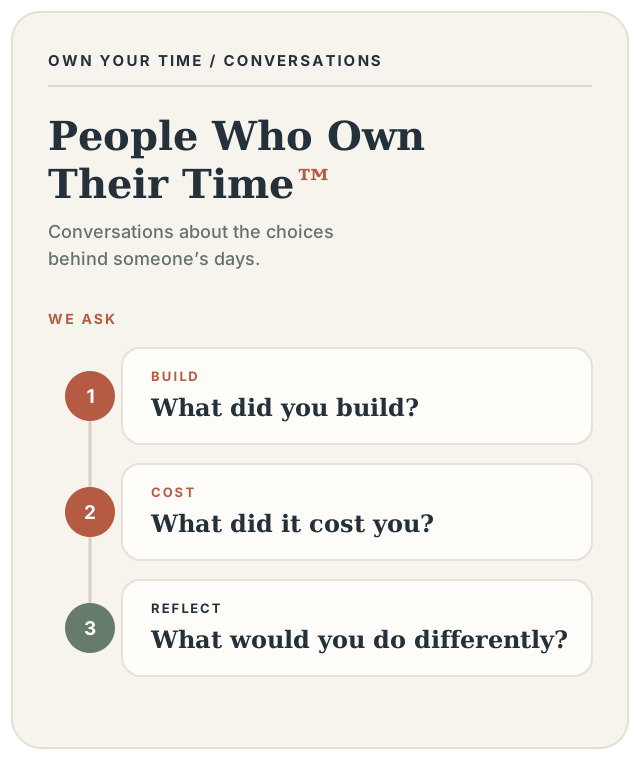
People Who Own Their Time™
Conversations about the choices behind someone's days.
We askWhat did you build?
We askWhat did it cost you?
We askWhat would you do differently?
Three questions. Build, cost, reflect.
Each month we sit down with a corporate leader or a first-generation entrepreneur and ask them those three questions. The answers are rarely neat. That's the point.
We're recording the first conversations now. They take about forty minutes, guests read the piece before it goes out, and nothing is published without their go-ahead.
Know someone who should be here? Or think it might be you? Write to us.
connect@ownyourtime.in
Pillar IV
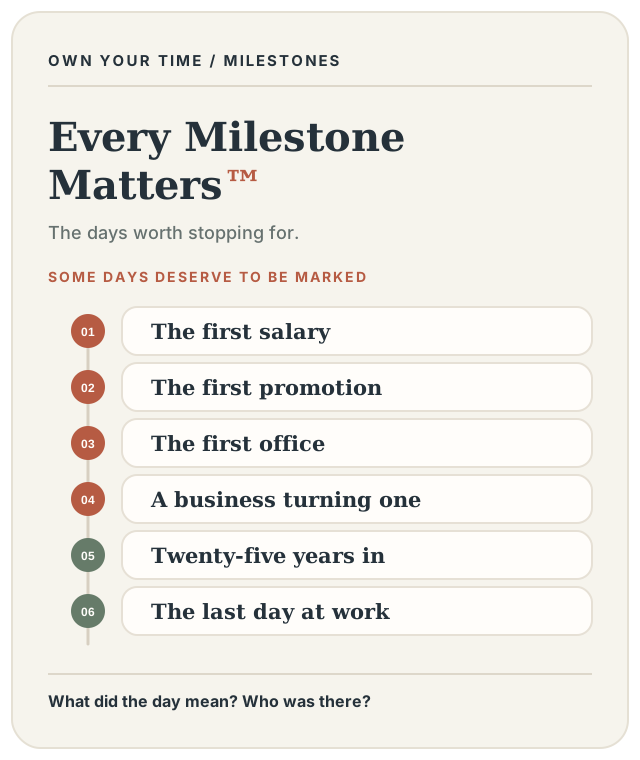
Every Milestone Matters™
The days worth stopping for.
Some days deserve to be marked. The first salary you handed to your parents. The morning you unlocked your first office, even if it was one room above a shop. Twenty-five years at the same company. The last school pickup before your youngest leaves home.
These moments go by fast, and most of us don't pause for them. This series is about the people who did: what the day meant to them, how they marked it, and who was there.
The first salaryOften handed straight to parents
The first promotionThe first time someone bets on you
The first officeEven one room above a shop
A business turning oneYou made it through year one
Twenty-five years inA career's worth of mornings
The last day at workAnd the first day after
What did the day mean? Who was there?
We also write about the places these moments happen. The way a home or an office is set up shapes how people spend their time in it, so the spaces are part of the story too.
Sometimes a story includes a gift. If that gift is a Time Freedom watch or clock, we'll say so.
Tell us about a milestone
A moment you marked, or one someone marked for you. A few lines is plenty. We may get in touch to hear more.
connect@ownyourtime.in
About
Why this exists
The people I admire most aren't the ones with the most free time. Most of them are busier than I am. What they have is a sense that their week is their own. They decide what gets their attention, when they're unreachable, and which evenings belong to their families.
I wanted to understand how they do that, and what it costs them. Own Your Time is where I'm writing it down.
Who it's for
It's for working professionals, corporate leaders and first-generation entrepreneurs. People with a team to look after, a business to keep afloat or a family that depends on them, who still want a say in how their days go.
You won't find advice to quit your job here. For most people, owning their time looks much more ordinary than that. It's getting home for dinner. It's turning down a client who would have taken every weekend. It's finally taking a proper day off.
What we publish
One piece a week, under one of four headings:
Time and Attention. Where your hours actually go, and how to take a few of them back.
Ambition Without Burnout. Building a career or a company without running yourself into the ground.
People Who Own Their Time™. Long conversations about what someone built, what it cost and what they'd do differently.
Every Milestone Matters™. First salaries, first offices, retirements, and the homes and workplaces where these moments happen.
Who's behind it
Own Your Time is a content platform by Time Freedom. Time Freedom makes watches and TimeArt wall clocks, so yes, we think about time a lot.
Most of what we publish has nothing to sell. Now and then a watch or a clock genuinely belongs in a story, like a gift for someone's first salary. When that happens we'll link to it and say so. Paid partnerships are always labelled.